Solar-Powered HVAC Systems: Navigating Electrical Safety and Load Management in Modern Homes
The Shift Towards Solar-Assisted Climate Control
As extreme weather events become more frequent, modern property owners are continuously seeking ways to fortify their homes against rising temperatures. Today, traditional air conditioning units stand as one of the most significant electrical loads in residential and commercial buildings alike.
To offset these immense energy requirements, the industry is witnessing a massive shift toward integrating rooftop photovoltaic (PV) arrays with high-power heating, ventilation, and air conditioning (HVAC) equipment.
However, powering heavy climate-control machinery with solar energy is rarely a simple “plug-and-play” scenario. Connecting sensitive solar technology to highly demanding mechanical cooling systems introduces a complex web of electrical conversion and safety challenges.
Engineers and contractors must ensure that these robust setups can handle volatile power draws without compromising the integrity of the home’s primary electrical panel or the municipal grid.
Electrical Infrastructure: Bridging the Gap Between PV Arrays and HVAC Loads
Transitioning a high-load HVAC system to run on solar energy requires more than just mounting panels on a roof; it demands a robust electrical infrastructure capable of handling intense Direct Current (DC) to alternating current (AC) conversions safely.
When integrating heavy climate control loads, such as central air conditioning compressors, electrical contractors must prioritize commercial-grade protection mechanisms like arc fault detection and Surge Protection.
To meet these stringent safety protocols, modern solar installations often integrate specialized components designed by companies like the renewable energy component manufacturer BENY.
Utilizing high-standard DC circuit breakers and rapid shutdown devices ensures that high-voltage rooftop arrays can be reliably de-energized during HVAC maintenance or emergency grid failures, safeguarding both the technicians and the property.
Without proper infrastructure, the inrush current from an AC unit starting up can easily overwhelm a standard solar inverter. High-capacity DC components act as the critical bridge, absorbing power spikes and ensuring smooth, uninterrupted energy delivery.
Key Safety Protocols in High-Load Solar Integration
Bridging the power gap safely requires strict adherence to modern electrical codes. Engineers must account for both the mechanical strain of the HVAC unit and the electrical volatility of the solar array.
Managing Surge Protection and Rapid Shutdowns
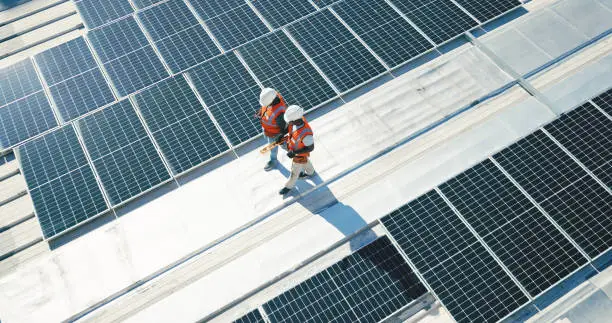
When servicing rooftop HVAC units or responding to an emergency, technicians are often working in close proximity to live PV panels. This makes implementing a Rapid Shutdown (RSD) mechanism a non-negotiable safety requirement under the National Electrical Code (NEC).
An RSD system ensures that the high-voltage DC power running across the roof is reduced to safe levels within milliseconds. This rapid isolation is vital for several reasons:
- Arc Fire Prevention: Instantly cutting power minimizes the risk of sustained electrical arcs if a wire is damaged near combustible roofing materials.
- Technician Safety: HVAC repair crews can safely access rooftop compressors without the risk of lethal shock from active solar arrays.
- First Responder Access: Firefighters can safely douse a structure with water once the RSD system has successfully de-energized the roof’s electrical pathways.
Load Balancing for Air Conditioning Units
Air conditioners are notorious for their high inrush currents. The initial Compressor Load required to kickstart the cooling cycle can be up to three times higher than the unit’s continuous running wattage.
If a PV system is not properly balanced, this sudden demand spike can trip standard breakers, overload standard inverters, and temporarily disrupt the home’s power supply.
To manage this, modern solar-HVAC integrations rely heavily on smart inverters and Battery Energy Storage Systems (BESS). These storage units act as a buffer, discharging rapid bursts of power to satisfy the AC startup surge without drawing heavily from the grid.
By flattening these demand peaks, contractors ensure the long-term health of both the solar array components and the HVAC compressor motors.
Sustainable Cooling: The Environmental and Economic Impact
The urgency to adopt solar-assisted cooling solutions is primarily driven by escalating global temperatures and the subsequent strain on municipal power grids. As extreme heat waves become more frequent, traditional infrastructure is struggling to keep up with the power draw of conventional AC units.
According to comprehensive data from the International Energy Agency (IEA) report on space cooling, the global energy demand for cooling is projected to more than triple by 2050, making it one of the most critical drivers of electricity demand worldwide.
By retrofitting existing HVAC systems with localized solar arrays and robust electrical safeguards, property owners not only reduce peak demand reliance but also contribute to a much-needed decentralized energy landscape.
Ultimately, this transition benefits both the economy and the environment. Homeowners shield themselves from volatile peak-hour utility rates, while power companies benefit from reduced strain on aging grid infrastructure during peak summer months.
Key Takeaways
| Area | Key Takeaway | Impact/Data |
| Safety | Deploy DC breakers and Rapid Shutdowns | Prevents arc fires and de-energizes in milliseconds |
| Load | Buffer high HVAC compressor inrush currents | Covers startup surges up to 3x running wattage |
| Equipment | Install smart inverters and BESS buffering | Prevents breaker trips and inverter damage |
| Demand | Adopt solar-assisted space cooling systems | Offsets cooling demand projected to triple by 2050 |
Conclusion: Building Resilient and Efficient Home Ecosystems
Achieving a truly efficient home cooling system goes far beyond simply purchasing an air conditioner with a high SEER rating. The true measure of a resilient climate control setup lies in the reliability and safety of its underlying electrical infrastructure.
By pairing heavy-duty HVAC systems with optimized solar arrays, homeowners can achieve unprecedented energy independence. However, this is only possible when contractors implement industrial-grade safety components.
From handling aggressive startup surges to ensuring reliable rapid shutdowns, modern solar architecture is the key to unlocking the full potential of sustainable home climate control.