Smart Locks or Traditional Locks? A Coventry Homeowner’s Security Guide
A secure front door is one of the simplest ways to improve home security, yet many homeowners do not think about their locks until a key goes missing, a door becomes difficult to secure or there has been a burglary nearby.
For homeowners in Coventry, upgrading a door lock often leads to the same question: should you choose a modern smart lock or stay with a traditional mechanical lock?
Both can provide effective security when the right product is installed properly. The better choice depends on your property, how you use the door, the level of convenience you want and any requirements set by your home insurance policy.
This guide explains the practical differences between smart and traditional locks, the security standards worth checking, and the parts of the door that should be assessed before you spend money on an upgrade.
Start With the Security of the Existing Door
Before comparing lock technology, it is worth looking at what is already fitted.
A lock does not work in isolation. Its effectiveness depends on the cylinder, locking mechanism, door, frame, hinges and keeps all working together.
Many properties still have older cylinders or mechanical components that have been used for years. They may continue to lock normally while offering less protection than a newer security-rated replacement.
Euro-cylinder locks deserve particular attention because older versions may offer limited resistance to lock snapping. This method involves deliberately breaking the cylinder to gain access to the locking mechanism.
Replacing an outdated cylinder with a properly rated option can therefore be a significant security improvement without necessarily replacing the entire door.
If a break-in has already damaged the door, however, restoring security should come before planning future upgrades. Professional Emergency burglary repair in Coventry can help make the property secure again before longer-term improvements are considered.
Once the immediate problem is resolved, you can decide whether a stronger traditional system, smart access or a combination of both makes most sense.
How Traditional Door Locks Work for Modern Homes

Traditional mechanical locks remain common for a good reason.
They are straightforward, familiar and do not depend on batteries, apps, Wi-Fi or software. A well-made mechanical lock fitted correctly can continue to provide dependable security for many years.
For suitable doors, homeowners may also look for recognised British security standards such as BS3621.
Advantages of Traditional Locks
A quality traditional lock offers several practical benefits.
Simple operation
There is very little to learn. Insert the correct key, operate the lock and secure the door.
No electronic dependency
The lock continues working regardless of internet connectivity, phone problems or battery level.
Established security standards
Mechanical locks have long-established testing and certification systems, making it easier to identify products that meet recognised standards.
Easy professional servicing
Experienced locksmiths are familiar with mechanical cylinders, mortice locks and multipoint mechanisms, making repair and replacement straightforward in most cases.
Where Traditional Locks Can Be Less Convenient
The main limitations tend to involve key management.
If a key is lost or stolen, homeowners may decide to replace or re-key the lock.
Spare keys can also become difficult to keep track of over time. One may be with a relative, another with a former tenant and another hidden somewhere around the property.
Traditional locks also provide no access history. Once someone has a working key, the lock itself cannot tell you when that person entered the property.
For households that value simplicity above everything else, these limitations may not matter. For others, they are exactly what makes smart access attractive.
What Changes When You Install a Smart Lock?
Smart locks replace or supplement the traditional key with electronic access.
Depending on the model, entry might be controlled through:
- A mobile application
- A PIN code
- A key fob
- A fingerprint
- Another authorised digital method
The biggest difference is not simply that you can unlock the door without a key. It is the amount of control you can have over access.
Why Homeowners Choose Smart Locks
Temporary Access Is Easier
Imagine a cleaner, relative or tradesperson needs access while you are away.
With a traditional lock, that usually means providing a physical key.
Some smart systems allow temporary access to be created and later removed without changing the lock or recovering a spare key.
Access Can Be Managed More Easily
Instead of wondering who still has copies of your house key, authorised users can be managed electronically on compatible systems.
That can be particularly helpful for households where several people regularly need access.
Some Systems Provide Activity Records
Many smart locks can record when authorised access occurs.
For homeowners who want greater visibility over when a door is being used, this can be useful.
Smart Security Can Work With Other Devices
Compatible locks may also form part of a wider home-security setup alongside cameras, alarms and other connected equipment.
The benefit is convenience and visibility rather than simply replacing a metal key with a phone.
Smart Locks Still Need Strong Physical Security
A lock having an app does not automatically make it more secure.
The physical construction of the product still matters.
A poorly made smart lock can be a weaker choice than a high-quality traditional lock. That is why buyers should look beyond features such as fingerprint access, remote unlocking or attractive design.
The mechanical strength of the lock and any recognised testing or certification should also be considered.
The original door itself must also be suitable for the installation.
A professional assessment can help establish whether the existing door, cylinder and multipoint mechanism will work properly with the proposed smart system.
Smart vs Traditional Locks: Which Is Better?
There is no universal answer.
The decision becomes easier when you think about what matters most to your household.
A Traditional Lock May Suit You If:
- You prefer a simple key-operated system
- You do not need remote access
- You want minimal dependence on electronics
- Your existing door already has a strong compliant locking system
- You want straightforward operation and maintenance
A Smart Lock May Suit You If:
- Several people regularly need access
- You want to reduce reliance on spare keys
- Temporary access would be useful
- You value access records
- You already use other smart-home security equipment
- Convenience is an important part of the upgrade
For some properties, the best answer may not be choosing one and rejecting the other.
Why a Hybrid Security Setup Can Make Sense
A strong mechanical locking system can provide the physical security of a conventional lock while smart technology adds convenience.
This can allow homeowners to retain a robust mechanical element while introducing features such as digital access management.
It can also be useful where insurance requirements affect which lock must remain fitted to the property.
Before changing anything, however, homeowners should check those insurance conditions carefully.
Check Your Home Insurance Before Replacing a Lock
This is one of the easiest details to overlook.
Some UK home insurance policies specify the type or security standard required for locks fitted to final exit doors.
A policy may, for example, refer to a five-lever mortice deadlock meeting BS3621.
Installing a smart lock does not automatically mean that requirement has been satisfied.
A sophisticated electronic system may offer useful security features while still not matching the exact wording of the policy.
Before purchasing a replacement:
- Read the security section of your home insurance policy.
- Identify whether a specific lock standard is mentioned.
- Compare that requirement with the proposed lock.
- Ask for professional advice if the compatibility is unclear.
Where necessary, retaining an insurance-compliant mechanical lock while adding smart functionality may be the more practical approach.
The important point is to establish this before the upgrade rather than after it.
Do Not Judge Security by the Front Door Alone
Replacing the front-door lock can make homeowners feel that the property has been secured, but a house is only as secure as its easiest entry point.
A proper security review should also consider areas such as:
- Rear doors
- Patio doors
- Side entrances
- Garage access
- Ground-floor windows
- Gates
- Other accessible openings
If the front door has an excellent new lock but a rear entrance has an ageing cylinder or poorly aligned mechanism, the overall security problem has not really been solved.
A locksmith assessment can help identify which part of the property deserves attention first.
The Door and Frame Matter as Much as the Lock
Sometimes what appears to be a lock problem actually begins somewhere else.
A locking mechanism depends on accurate alignment between the door and frame.
When that alignment changes, the lock can become increasingly difficult to operate.
You may notice:
- The handle becoming stiff
- The door needing to be lifted before locking
- The key becoming harder to turn
- The mechanism catching
- The door needing extra pressure to close
These symptoms should not simply be overcome by forcing the handle.
Continually forcing a misaligned multipoint locking system can place additional pressure on its internal components and eventually turn an alignment problem into a mechanism repair.
Timber and uPVC doors can both experience movement. Moisture, weather and changes around the frame can all affect how the components line up.
If a lock suddenly becomes harder to operate, having the alignment inspected is usually more sensible than continuing to force it.
Moisture Problems Can Eventually Affect Door Security
The source of a door-alignment problem is not always the door itself.
Persistent moisture entering the building can affect surrounding materials and contribute to movement over time.
Water may enter through areas such as failed flashing, blocked drainage or displaced roofing materials before affecting other parts of the property.
This is why advice from roofers Edinburgh homeowners contact after wet weather can sometimes overlap with the advice a locksmith gives further south: fixing the visible symptom is not enough if the source of the moisture remains untreated.
If damp is contributing to movement around a door frame, repairing only the lock may mean dealing with the same alignment issue again later.
Look at the wider condition of the building as well as the locking mechanism itself.
Security Standards Worth Asking About
Certification gives homeowners a more useful basis for comparing locks than marketing claims alone.
Depending on the type of lock or cylinder being considered, recognised standards may include:
- BS3621 for suitable traditional locks
- TS007 ratings for euro cylinders
- Sold Secure Diamond-rated cylinders
- Relevant recognised testing for smart locking products
For euro cylinders in particular, anti-snap protection is worth discussing with a locksmith.
The right standard will depend on the door and locking system, so there is little benefit in buying a highly rated product that is unsuitable for the existing installation.
Five Things to Do Before Upgrading Your Locks
1. Have the Existing Door Assessed
Find out whether the lock itself is actually the weakest part.
The cylinder, multipoint mechanism, frame or another entrance may deserve attention first.
2. Check Your Insurance Requirements
Do this before ordering a smart lock or removing an existing mechanical one.
3. Decide How You Want to Manage Access
Consider who needs entry to the property and whether temporary or remotely managed access would genuinely be useful.
4. Check Recognised Security Ratings
Features are useful, but they should not replace basic physical security.
5. Use Proper Installation
Even a good lock can perform poorly when fitted incorrectly or installed into an unsuitable or badly aligned door.
Professional fitting gives you the opportunity to have the whole door assessed at the same time.
When Is It Time to Replace an Existing Lock?
You do not necessarily need to wait until a lock fails completely.
It may be worth arranging an assessment when:
- Keys have been lost or stolen
- You do not know who still holds spare keys
- The existing cylinder is old
- The lock has become stiff
- The door needs lifting or pushing to lock
- There has been an attempted break-in
- You have recently moved into the property
- You want stronger anti-snap protection
- You want to introduce managed smart access
In some cases, a relatively small upgrade may be enough.
Replacing a cylinder or correcting the door alignment may solve the problem without changing the entire locking system.
That is another reason a professional assessment should come before choosing products.
Getting Professional Locksmith Advice in Coventry
Lock upgrades work best when the recommendation starts with the property rather than with a particular product.
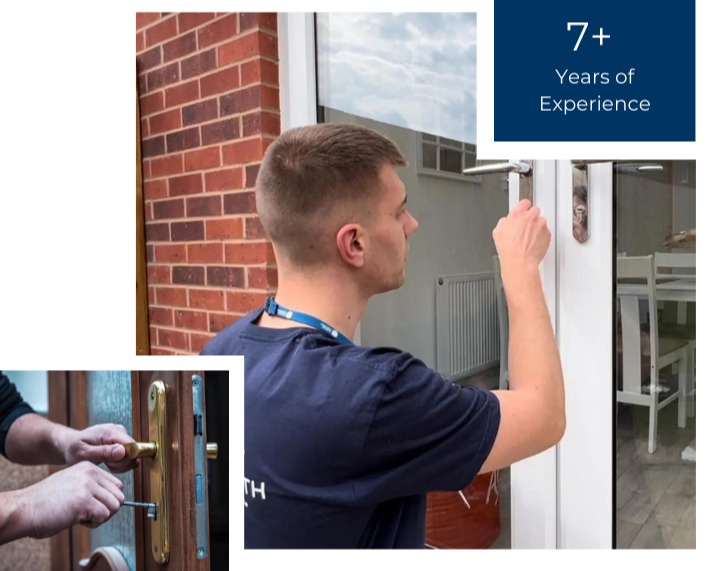
Kingdom Locksmith helps homeowners across Coventry assess their existing door security and choose an appropriate solution, whether that means improving a traditional lock, installing smart access or combining different security measures.
A proper inspection can establish:
- Whether the existing cylinder needs upgrading
- Whether the door is correctly aligned
- Whether the multipoint mechanism is operating properly
- Which security standard is appropriate
- Whether a proposed smart lock is suitable
- Whether another entrance is currently the property’s weaker point
This prevents homeowners spending money on technology while overlooking a more basic security issue.
For local businesses, physical security is only one part of protecting day-to-day operations. Restaurants and takeaways increasingly depend on reliable digital ordering as well, and platforms such as OrderApps give UK food businesses their own branded online ordering website and mobile apps while keeping customer orders under their own brand.
Final Thoughts
Smart locks and traditional locks both have a place in modern home security.
Traditional locks remain a practical choice for homeowners who value simplicity, recognised mechanical security and independence from electronic systems.
Smart locks add convenience, flexible access and greater control over how authorised people enter the property.
The most important decision is not simply choosing between “smart” and “traditional.” It is making sure the entire door is secure, the lock is suitable for the property, the installation is carried out correctly and any insurance requirements are still being met.
Check the door and frame, review your policy, look at the whole property and get professional advice before making a final decision.
A thoughtful upgrade is more valuable than simply buying the newest lock available.
Need Help Choosing the Right Lock?
If you are considering an upgrade but are unsure which option suits your property, Kingdom Locksmith can inspect your existing setup and explain the available choices.
For homeowners looking for a dependable locksmith service near Coventry, the team can help with mechanical locks, security upgrades, smart-lock options and door-locking problems.
Getting the door assessed first can help you choose the right level of security without paying for features you do not actually need.
Call Kingdom Locksmith for a free quote and advice: +44 24 7542 0099