Italy by Train: A First-Timer’s Guide to Milan and Florence
Italy has a habit of making a short holiday feel impossibly full. A few days can take you from Milan’s sharp-edged design districts and grand shopping arcades to Florence’s Renaissance churches and riverside streets. The trick isn’t to squeeze in every landmark. It’s to give the two cities enough breathing room and make the journey between them part of the plan.
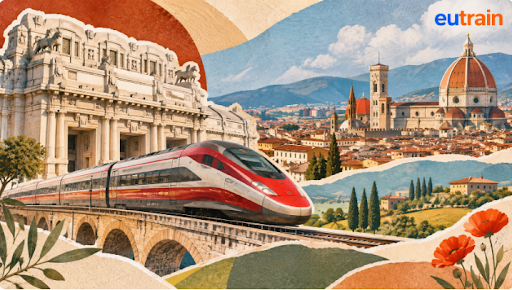
Milan and Florence work particularly well together because they offer different versions of Italian city life without demanding an exhausting travel day. Direct high-speed trains link the two, with many journeys taking roughly two hours or less. That leaves time for a morning coffee in one city and a late lunch in the other, provided you choose your stations carefully.
Start with the station names, not just the city names. In Milan, the most convenient departure point for many visitors is Milano Centrale, but some services use other stations, including Milano Rogoredo. A practical milan train station guide can help you get your bearings before you reach the concourse, especially if you are travelling with luggage or arriving by metro. Centrale connects with Milan’s M2 and M3 underground lines, so it is straightforward to reach from several parts of the city.
Give Milan More Than a Quick Look at the Duomo
Milan is sometimes treated as a place to fly into before heading elsewhere. That misses much of its appeal. The cathedral and the glass-roofed Galleria Vittorio Emanuele II make a striking introduction, but the city becomes more interesting when you step away from the obvious stops.
Brera is a good neighbourhood for an unhurried afternoon: smaller streets, galleries, bookshops and places to stop for some refreshments. For a different atmosphere, walk along the canals in Navigli later in the day. If design or architecture is your thing, make room for a few less predictable stops instead of filling every hour with museums.
Two nights in Milan is a comfortable starting point for a first visit. It gives you one full day for the major sights and another stretch of time for exploring without watching the clock. If you want to see Leonardo da Vinci’s The Last Supper, look into reservations well ahead of your trip; it isn’t an attraction to leave to chance.
Make the Train Ride the Easy Part
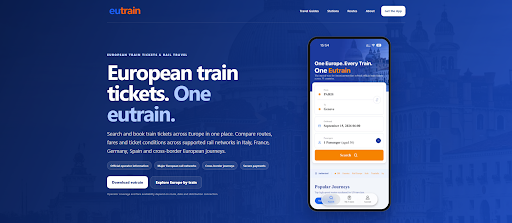
For the journey to Florence, compare Trenitalia’s Frecciarossa services with Italo’s high-speed trains. Both operate on the Milan–Florence corridor, and direct services can get you between the cities in under two hours. The differences that matter most to an ordinary traveller are usually departure time, ticket conditions and total price rather than a small variation in journey length.
Don’t look at the headline fare alone. A cheaper ticket may come with stricter rules for changes, which is fine if your plans are fixed but less appealing when you’re travelling around a flight arrival or a busy sightseeing day. Italo, for example, offers different fare types with different change conditions. Check the details attached to the exact ticket before paying, and give yourself a sensible margin to reach the station.
There is also no need to build the day around an early train simply because it is available. A late-morning departure can work beautifully: enjoy breakfast in Milan, arrive in Florence around lunchtime or early afternoon, drop your bags and explore on foot. If you are travelling with large suitcases, staying within easy reach of the stations at either end can save more time than shaving a few minutes off the train journey.
Florence’s main station is Firenze Santa Maria Novella, usually shortened to Firenze SMN or Firenze S.M.N. on travel documents. It’s close to the historic centre, which is one reason the rail route works so well. A Florence train station guide is useful for understanding the exits, nearby transport and how to continue towards your accommodation. Before you travel, check that your ticket actually says Firenze S. M. Novella rather than another Florence station.
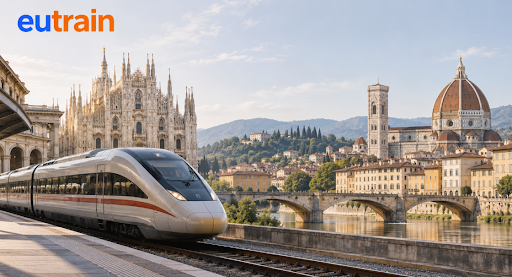
Let Florence Slow the Itinerary Down
Florence rewards walking, but it also rewards restraint. Its big names—the cathedral complex, the Uffizi Galleries, the Accademia and Ponte Vecchio—are close enough to make an ambitious sightseeing schedule tempting. Trying to race through them all can turn a beautiful city into a series of queues and ticket times.
Choose one major museum or reserved attraction for a day, then leave space for the streets around it. Walk through Piazza della Signoria, cross the Arno and explore the Oltrarno neighbourhood, where workshops and quieter corners provide a useful contrast with the busiest parts of the centre. Towards evening, a stroll along the river is as memorable as many paid attractions.
For a first trip, two or three nights in Florence gives you room to see the essentials without rushing. A third day could be spent discovering more of the city, or taking a separate day trip into Tuscany if the rail or bus connections fit your plans. If you are continuing to Rome, Florence is also a convenient stop on Italy’s north–south high-speed rail network.
A final practical point: not every Italian train ticket follows the same rules. High-speed services generally come with a specific booked train and seat, while regional services have their own ticket and validation requirements. Don’t assume that advice for one type applies to another. Keep your ticket available on your phone, check the departure boards and follow the conditions given by the operator.
A Milan-and-Florence trip does not need to be complicated to feel rich. Give Milan time to surprise you, let Florence unfold at walking pace, and use the train to join two distinct cities without losing a day to the journey. The best itinerary isn’t the one with the most stops. It’s the one that still leaves room to enjoy where you are.