
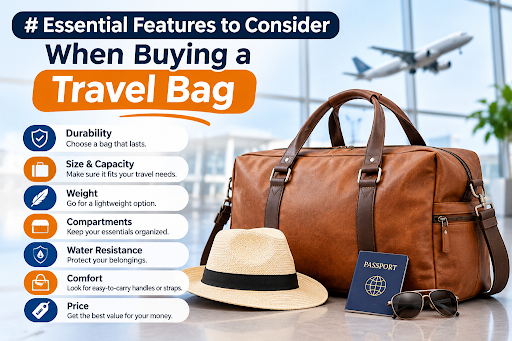
Essential Features to Consider When Buying a Travel Bag
Buying a travel bag can feel overwhelming. There are hundreds of styles, materials, and price points, and it’s hard to know which details actually matter until you’ve been stuck in a terminal with a bag that doesn’t work. The good news is that a handful of features separate a great travel bag from a frustrating one. Here is what to look for before you spend your money.
Material and Build Quality
The material determines how long your bag lasts and how it looks along the way. Full-grain leather is the gold standard for durability. It keeps the strongest layer of the hide intact, resists abrasion, and develops a rich patina with use. Top-grain leather is a solid second choice, slightly more refined on the surface and still tough enough for regular travel.
Be careful with labels like “genuine leather” or “bonded leather,” which can describe lower-grade or reconstituted material that cracks and peels. Good sellers will tell you exactly what type of leather they use, and that transparency is a strong sign of quality.
Size and Capacity
A bag that’s too small forces you to leave things behind, while one that’s too large invites overpacking. For most travelers, 15 to 25 liters is the right range for a backpack, enough for a laptop, a change of clothes, and daily essentials. Check your airline’s carry-on and personal item limits as well, since they vary by carrier and fare class.
Structured designs keep their shape, which makes packing more predictable and helps the bag fit neatly under a seat or in an overhead bin.
A Dedicated Laptop Compartment
If you travel with a computer, a purpose-built compartment is non-negotiable. A leather backpack laptop design should include a padded sleeve that fits your device snugly, ideally with a bit of elevation off the base of the bag so the laptop isn’t jolted when you set the pack down. Check the sleeve dimensions against your laptop size, since a 16-inch model won’t fit a compartment built for 13 inches.
Easy access matters too. A compartment that opens wide or sits close to the back panel makes airport security checks quicker and keeps your device protected from bumps.
Comfort and Carrying Options
Leather is heavier than nylon, so comfort features make a real difference. Look for wide, padded, adjustable shoulder straps that spread weight evenly. A padded back panel adds support on long days, and a top handle lets you grab the bag quickly in crowded spaces. A chest or sternum strap is a bonus for heavier loads.
A trolley sleeve, which slides over the handle of a rolling suitcase, is one of the most useful travel features around. It lets your backpack ride along instead of weighing on your shoulders through long terminals.
Organization and Pockets
Good organization turns a bag from a pile of space into a system. Look for interior zip pockets for small valuables, slip pockets for chargers and cables, and a quick-access exterior pocket for your passport, boarding pass, or phone. A bag that lets you find things without unpacking saves time and stress, especially at security and during tight connections.
Don’t go overboard, though. Too many compartments add weight and complexity. Choose a layout that matches what you actually carry.
Hardware and Stitching
The small details are often where bags succeed or fail. Solid brass or high-quality metal zippers, buckles, and rivets last far longer than plated plastic. Zippers should be large, smooth, and sturdy enough to handle a fully packed bag. Stitching should be tight and even, with reinforcement at the strap anchors, handle bases, and other stress points.
Flip the bag over and check the bottom, too. A reinforced base resists scuffs, helps the bag stand upright, and prevents sagging over time.
Security Features
Travel exposes your belongings to crowds, so a few security touches are worthwhile. Look for zippers that lock or tuck away, hidden pockets for passports and cash, and flap closures that keep access points facing your body. Some bags include RFID-blocking pockets, a helpful extra for cards and passports.
Choosing Where to Buy
Even the best features mean little if the bag isn’t built honestly. Buy from a seller who provides clear details on leather type, construction, and dimensions, and who offers a fair return policy and responsive support. Brands like Alaskan Leather Company focus on bags built for everyday use, and you can browse their range at alaskanleathercompany.com to compare sizes, finishes, and features against your own checklist.
Close-up photos of stitching and hardware, honest weight specifications, and customer reviews from people who travel the way you do can all help you decide with confidence.
Care and Longevity
Once you’ve chosen a bag, a little maintenance keeps it in top shape. Wipe it with a soft, dry cloth, condition the leather every few months, and let it dry naturally if it gets wet, away from direct heat. Store it in a cool, dry place and avoid overstuffing it. Good habits like these can stretch the life of a quality bag across many years and many trips.
Putting It All Together
The best travel bag balances durability, comfort, organization, and style. Start with quality materials and solid construction, make sure the size and laptop compartment fit your needs, and choose a seller you trust. Do that, and you’ll have a bag that handles every flight, commute, and weekend getaway while looking better with each passing year.