
How AI Avatars Are Changing the Way Businesses and Creators Communicate Online
Something fundamental has shifted in the way video content gets made. For years, producing a professional talking-head video meant booking a studio, hiring talent, managing lighting and sound, and then sitting through rounds of editing. A single two-minute corporate video could take days to produce and cost thousands of pounds. For small businesses, freelancers, and solo creators, that cost was often enough to kill the idea entirely.
AI avatars have rewritten that equation. A digital presenter — realistic in appearance, natural in speech, and available in dozens of languages — can now deliver your script on camera without a single human stepping in front of a lens. The technology has matured rapidly, moving from robotic-looking digital puppets to lifelike figures that maintain eye contact, gesture naturally, and modulate their tone in ways that genuinely hold a viewer’s attention.
The implications stretch far beyond convenience. This is reshaping how organisations approach video communication at scale, and the tools available in 2026 make it accessible to virtually anyone.
What AI Avatars Actually Are — and Why They Work
An AI avatar is a digitally generated human figure that can be animated to speak, move, and express emotions based on text or audio input. Unlike simple animation or cartoon characters, modern AI avatars are designed to look and behave like real people. They blink, they pause, they shift their weight — all the subtle cues that make human communication feel authentic.
The underlying technology combines several AI disciplines: facial generation models create the visual appearance, text-to-speech engines handle voice synthesis, and motion models drive realistic lip-sync and body language. The result is a virtual presenter that can deliver any script you write, in any language you choose, without ever needing a break or a retake.
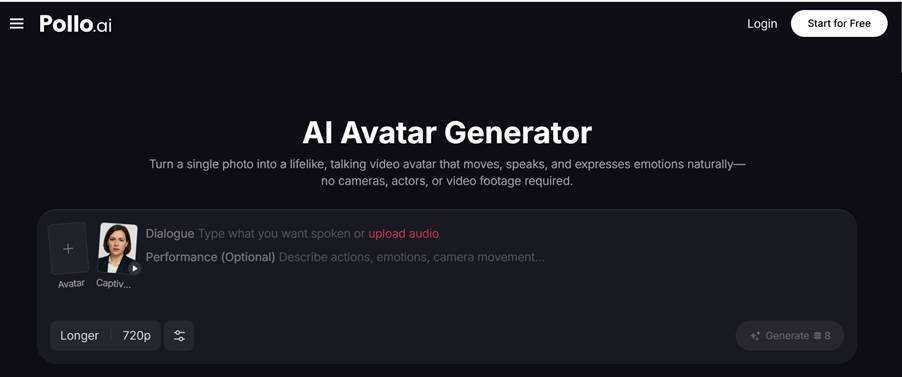
Pollo AI offers a robust AI avatar creation tool that brings this technology together in a particularly accessible way. What makes Pollo AI’s implementation stand out is the range of customisation available — users can select from a diverse library of avatar appearances, adjust vocal tone and pacing, and generate videos that feel tailored rather than templated. For creators who need to produce consistent video content without the overhead of traditional production, it removes the most significant bottleneck: the need for on-camera talent.
The quality threshold has crossed an important line. Two years ago, most AI avatars sat squarely in the uncanny valley — close enough to human to be unsettling, but not close enough to be convincing. Current implementations, including Pollo AI’s, handle the nuances of facial expression and speech cadence well enough that viewers often can’t immediately distinguish them from recorded human presenters, particularly in professional contexts like training videos and product demonstrations.
Where AI Avatars Deliver the Most Value
The use cases for AI avatars have expanded well beyond novelty. Several categories of content benefit disproportionately from the technology, and understanding where avatars excel helps you decide whether they fit your workflow.
Corporate training and onboarding is perhaps the strongest current application. Large organisations produce enormous volumes of training content that needs to be updated regularly — compliance modules, process documentation, product training. Filming a human presenter every time a policy changes is expensive and slow. An AI avatar can re-record an updated script in minutes, maintaining visual consistency across an entire training library without scheduling a single shoot.
Multilingual content creation is another area where avatars shine. A business expanding into new markets traditionally faced a choice: subtitle existing videos, hire local presenters, or dub with voice actors. AI avatars sidestep all three options by generating native-language versions of the same content with lip-sync that matches the target language. For companies operating across European markets, this capability alone can justify the investment.
Social media and short-form content production benefits from the sheer speed of avatar-based workflows. Creators who need to publish daily or multiple times per week often struggle to maintain a consistent on-camera presence. An AI avatar allows them to maintain their publishing cadence without the fatigue and time commitment of filming themselves repeatedly.
Customer-facing communications — product walkthroughs, FAQ videos, personalised outreach — represent a growing category. The ability to generate a video that addresses a customer by name and speaks to their specific situation, all without human involvement, opens up personalisation at a scale that was previously impractical.
Comparing the Leading AI Avatar Platforms
The market has matured to the point where meaningful differences exist between platforms, and choosing the right one depends on your priorities.
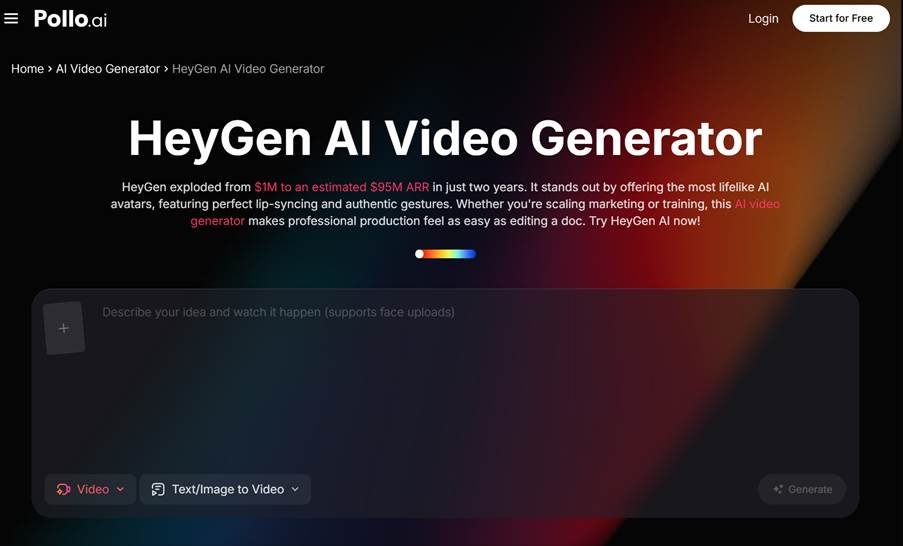
HeyGen has established itself as one of the most polished options in the enterprise space, offering a comprehensive suite that goes beyond basic avatar generation. Its strength lies in the breadth of its avatar library, support for over 175 languages, and a workflow designed for teams producing content at volume. HeyGen is particularly well-suited for organisations that need to produce localised video content across multiple markets simultaneously — its translation and dubbing features are among the best available. Pollo AI provides access to HeyGen’s capabilities, making it straightforward to explore alongside other avatar tools on the same platform.
Synthesia occupies a similar enterprise-focused position, with a strong emphasis on corporate training and internal communications. Its template library is extensive, and it integrates well with learning management systems, which makes it a natural fit for L&D teams. The trade-off is that its customisation options can feel somewhat constrained for creators who want a more distinctive visual identity.
D-ID takes an interesting approach by focusing on the animation of still photographs. If you have a specific face — a historical figure for an educational video, a company founder who doesn’t want to be on camera — D-ID can animate that image into a speaking avatar. It’s a narrower use case, but one it handles well.
What positions Pollo AI effectively in this landscape is its balance of quality, flexibility, and ease of use. The platform doesn’t require you to commit to a single avatar style or workflow. You can experiment with different appearances, voices, and presentation formats without the learning curve that some enterprise-focused tools demand. For independent creators and small businesses in particular, that accessibility matters — you get professional-grade output without needing a dedicated video production team to operate the tool.
Getting Professional Results From Your AI Avatar
The tool matters, but so does your approach. A few principles consistently separate polished AI avatar videos from ones that feel obviously artificial.
Script writing for avatars requires a different rhythm than writing for a human presenter. Human speakers naturally add pauses, emphasis, and conversational asides that make a script feel alive. AI avatars follow your text more literally, which means you need to build those elements into the writing itself. Short sentences work better than long compound ones. Strategic paragraph breaks create natural pauses. And writing in a conversational register — the way you’d actually speak to someone — produces more convincing delivery than formal, written-for-the-page prose.
Background and framing choices significantly affect believability. A plain, well-lit background with the avatar positioned slightly off-centre looks more natural than an overly busy scene. The goal is to replicate the visual conventions viewers already associate with professional video — clean composition, appropriate headroom, and a setting that doesn’t compete with the speaker for attention.
Audio quality deserves more attention than many creators give it. Most platforms offer multiple voice options with varying degrees of naturalness. Spending time selecting and testing voices before committing to a full production run prevents the frustration of discovering that your chosen voice sounds slightly robotic at certain speeds or with certain phonemes.
Length discipline is crucial. AI avatar videos work best when they’re focused and concise. Viewers are more forgiving of subtle artificiality in a ninety-second explainer than in a ten-minute presentation. If your content runs longer, consider breaking it into chapters or segments with visual variety between sections.
The Ethical Dimension Worth Considering
As AI avatars become more convincing, the ethical questions become more pressing. The ability to generate a realistic digital human raises legitimate concerns about deception, consent, and authenticity.
Responsible use starts with transparency. If your audience might reasonably believe they’re watching a real person, disclosing that the presenter is an AI-generated avatar is both ethical and increasingly expected. Several platforms now include optional watermarking or disclosure features, and industry standards around labelling AI-generated content are developing rapidly.
The question of likeness rights is also evolving. Using an AI avatar that closely resembles a real individual without their consent raises legal and ethical issues that vary by jurisdiction. Reputable platforms address this by offering avatars based on consenting models or entirely synthetic faces that don’t correspond to any real person.
What Comes Next for AI Avatars
The trajectory points toward increasingly interactive applications. Static, pre-recorded avatar videos are giving way to real-time conversational avatars that can respond to viewer input — think AI-powered customer service representatives, interactive educational tutors, or virtual event hosts who can field live questions.
Emotional intelligence is the next frontier. Current avatars can simulate basic emotions — a smile, a serious expression — but the next generation will adapt their emotional tone dynamically based on the content they’re delivering, creating a more nuanced and engaging viewing experience.
For creators and businesses evaluating the technology today, the practical reality is encouraging. AI avatars have crossed the quality threshold where they deliver genuine professional value, and platforms like Pollo AI have made the barrier to entry low enough that experimentation carries minimal risk. The organisations and creators who start building avatar-based workflows now will have a meaningful head start as the technology continues its rapid improvement.