
Future Tech Skills: The Ultimate Guide to Stay Ahead in the Digital Age
The world is changing faster than most people expected. What once felt like advanced innovation is now part of everyday life, quietly influencing how we work, communicate, and make decisions. Much of this transformation is powered by breakthroughs in Artificial Intelligence and Machine Learning, which are rapidly becoming the backbone of modern industries.
In this fast-moving environment, staying still is not a safe option. Careers are evolving, traditional roles are being reshaped, and entirely new opportunities are emerging. Future tech skills are no longer just an advantage—they are essential for anyone who wants to remain relevant and competitive in the years ahead.
What Are Future Tech Skills?
Future tech skills refer to the knowledge and abilities needed to understand, work with, and adapt to emerging technologies. These skills go beyond traditional technical expertise and include the ability to think critically, analyze data, and apply digital tools effectively.
For instance, understanding concepts like Neural Networks can help you grasp how machines learn and make predictions, even if you’re not building AI systems yourself. The key is not mastering everything, but developing a mindset that embraces continuous learning and adaptability.
Artificial Intelligence and Machine Learning: The Driving Force of Innovation
Artificial intelligence is no longer confined to research labs—it is actively shaping industries across the globe. From personalized recommendations to intelligent automation, AI is redefining efficiency and productivity.
Having a working knowledge of Machine Learning allows you to understand how systems analyze data and improve over time. This skill is becoming valuable not only for developers but also for professionals in marketing, finance, healthcare, and beyond.
As AI continues to evolve, ethical considerations such as fairness, transparency, and bias are also becoming increasingly important, making this field both powerful and complex.
Data Science and Data Literacy: Turning Information into Insights
In today’s digital world, data is everywhere. The ability to interpret and use that data effectively is what sets successful professionals apart. The field of Data Science focuses on extracting meaningful insights from large volumes of information.
Data literacy is not limited to technical roles. It involves understanding patterns, interpreting visual data, and making informed decisions based on evidence. Organizations rely heavily on data-driven strategies, making this skill highly valuable across industries.
Cloud Computing: Powering the Digital Infrastructure
Modern digital services depend heavily on Cloud Computing, which allows businesses to store data, run applications, and scale operations efficiently without relying on physical infrastructure.
Platforms like Amazon Web Services and Microsoft Azure have become industry standards, offering a wide range of services for developers and businesses alike.
Understanding cloud computing basics can significantly enhance your technical capabilities and open up new career opportunities.
Cybersecurity: Safeguarding the Digital World
As technology advances, so do the risks associated with it. Cyber threats are becoming more sophisticated, making Cybersecurity a critical area of focus.
Cybersecurity involves protecting systems, networks, and data from unauthorized access and attacks. With increasing concerns about privacy and data protection, this field is experiencing rapid growth and demand.
Even basic knowledge of cybersecurity practices can help individuals and organizations stay protected in an increasingly digital world.
Automation and No-Code Development: Simplifying Complex Processes
Automation is transforming how work gets done by reducing the need for repetitive manual tasks. Tools like Zapier and Notion enable users to create workflows and manage tasks efficiently without requiring advanced coding skills.
This shift is making technology more accessible, allowing individuals from diverse backgrounds to build solutions and improve productivity. As businesses continue to prioritize efficiency, automation skills are becoming increasingly valuable.
Also Read: Driven.io Cybersecurity Updates (2026): AI Threats, Zero Trust & Future Security Trends
Blockchain and Web3: The Future of Digital Ownership
Technologies built on Blockchain are introducing new ways to manage transactions, ownership, and trust in the digital space. Blockchain provides a secure and transparent system that is resistant to manipulation.
While still evolving, this technology is influencing industries such as finance, supply chain, and digital identity. Understanding its fundamentals can provide valuable insights into the future of the internet.
Emerging Technologies: What to Watch in the Coming Years
Several emerging technologies are set to reshape the future in significant ways. Fields like Quantum Computing, Robotics, and Augmented Reality are pushing the boundaries of innovation.
Although these areas are still developing, they hold immense potential for long-term growth and career opportunities. Staying informed about these trends can give you a competitive edge.
Human Skills in a Tech-Driven World: The Ultimate Differentiator
While technical skills are essential, human abilities such as critical thinking, communication, and creativity remain irreplaceable. Technology can automate processes, but it cannot replicate human judgment and emotional intelligence.
Professionals who combine technical expertise with strong interpersonal skills will continue to stand out in an increasingly automated world.
How to Start Learning Future Tech Skills Today
Getting started in the world of modern technology doesn’t require a huge investment of time or money right away. The smartest approach is to begin with one area that genuinely interests you—whether that’s AI, data analysis, or something like Cloud Computing—and build a strong foundation step by step. Instead of trying to learn everything at once, focus on understanding the basics and then gradually expand your knowledge as you gain confidence.
Consistency matters far more than intensity. Setting aside even a small amount of time each day to learn, practice, and explore new tools can make a big difference over time. Applying what you learn through simple projects or real-world examples will help you retain knowledge and develop practical skills. At the same time, keeping up with industry trends—especially in areas like Artificial Intelligence—ensures you stay aligned with what’s actually relevant in today’s job market.
Progress may feel slow at first, but small, steady efforts often lead to meaningful long-term growth. The key is to stay curious, keep experimenting, and remain open to learning as technology continues to evolve.
Conclusion: The Future Belongs to the Adaptable
Technology will continue to evolve, bringing new challenges and opportunities. The key to staying ahead is not just learning specific tools but developing the ability to adapt and grow with change.
Future tech skills are an investment in your long-term success. By starting today and staying consistent, you can position yourself for a future filled with opportunity and innovation.
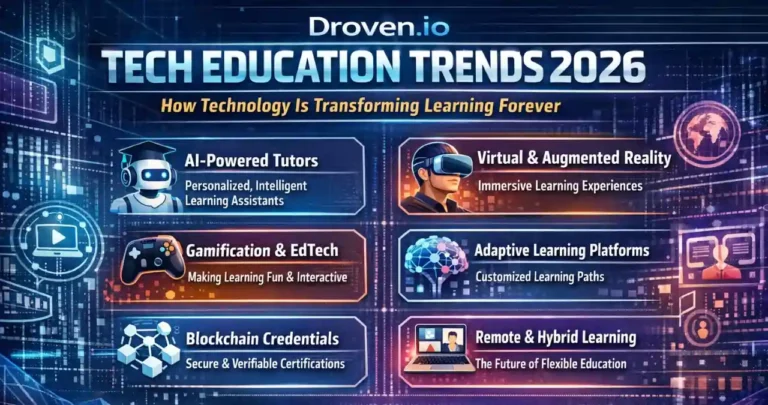
Also Read: Droven.io Tech Education Trends 2026: How Technology Is Transforming Learning Forever