Warren Glowatski: The Story of the Reena Virk Case, His Prison Years, and Life After Parole
Warren Glowatski is a name that remains closely associated with one of Canada’s most widely discussed youth murder cases. His story became known internationally because of the tragic death of 14-year-old Reena Virk in Saanich, British Columbia, in 1997. The case shocked the country not only because of the violence involved but also because it raised difficult questions about teenage bullying, group violence, accountability, rehabilitation, and forgiveness.
Over the years, interest in Warren Glowatski has continued, particularly after the release of the Hulu miniseries Under the Bridge, which brought renewed attention to Reena Virk’s life and the circumstances surrounding her death. Glowatski’s role in the case, his conviction, his years in prison, and his eventual release on parole have all become subjects of public discussion. Yet his story is also complicated by the fact that Reena’s family eventually participated in a restorative justice process with him.
Understanding Warren Glowatski requires looking beyond a simple true-crime narrative. The case involves a young victim, a group of teenagers, a devastating crime, and a long aftermath that affected multiple families. It also demonstrates how a criminal justice system can deal with someone who committed a serious crime as a teenager while attempting to balance punishment, rehabilitation, public safety, and the needs of victims.
Who Was Warren Glowatski?
Warren Glowatski was a teenager living in British Columbia when his life became permanently connected to the murder of Reena Virk. He was 16 years old at the time of the November 1997 attack, although some later reports and summaries have described him as 17 during parts of the legal proceedings. His youth became an important part of the discussion surrounding his case because the crime was committed when he was still a minor.
Public accounts of Glowatski’s early life describe a childhood marked by instability and frequent moves. His family circumstances were reportedly difficult, and he moved between different communities in Western Canada before eventually living on Vancouver Island. Those details have often been included in discussions of his background, but they should not be treated as an excuse for the crime. Understanding a person’s circumstances can provide context without removing personal responsibility.
As a teenager, Glowatski became involved in the events that led to Reena Virk’s death. The case would eventually reveal how a group assault could escalate into a fatal act of violence. His story therefore became part of a larger conversation about the influence of peer pressure, the desire for acceptance, adolescent aggression, and the consequences of trying to gain status within a group.
What Happened to Reena Virk?
Reena Virk was a 14-year-old girl whose death on November 14, 1997, became one of Canada’s most notorious youth crime cases. She was attacked by a group of teenagers near a bridge in Saanich, British Columbia. After the initial assault, Reena managed to move away from the group, but two teenagers, including Warren Glowatski, followed her. She was ultimately killed in the water.
The details of Reena’s final moments are extremely disturbing, and the case attracted widespread attention because of the apparent role played by multiple young people. The incident was not simply a confrontation between two individuals. It involved a group dynamic in which violence escalated dramatically, leaving a young girl dead and a community struggling to understand how such an event could happen.
Reena’s murder also drew attention to the bullying and social pressures she had reportedly experienced before her death. Her story has since been discussed in schools, documentaries, books, academic research, and television productions as an example of how bullying and group violence can have devastating consequences. Her family, meanwhile, had to live with the permanent loss of a daughter whose life was cut short at just 14 years old.
Warren Glowatski’s Role in the Crime
Warren Glowatski was identified as one of the teenagers directly involved in the attack that resulted in Reena Virk’s death. Prosecutors ultimately pursued a second-degree murder case against him, and he was convicted in 1999. His conviction meant that the Canadian justice system held him criminally responsible for his participation in Reena’s killing despite the fact that he was only 16 when the crime occurred.
The case involving Glowatski was different in some respects from the legal proceedings surrounding Kelly Ellard, the other teenager who was convicted in connection with Reena’s death. Both cases became the subject of significant media coverage, but their individual legal histories developed differently over time. Glowatski’s conviction and subsequent parole process became particularly notable because of his participation in rehabilitation and restorative justice.
It is important to remember that Reena Virk was the victim at the center of this story. Discussions about Glowatski’s rehabilitation or later life should never overshadow the fact that a 14-year-old girl lost her life. His later efforts toward rehabilitation may be part of the historical record, but they do not erase the harm caused by the crime or the grief experienced by Reena’s family.
The Trial and Life Sentence
Following his arrest, Warren Glowatski faced serious criminal charges and was eventually convicted of second-degree murder in 1999. He received a life sentence with the possibility of parole after seven years. The sentence reflected the seriousness of the crime while also recognizing the legal framework that applied to someone who was a teenager when the offense was committed.
A life sentence with parole eligibility does not mean that a person automatically walks free after the minimum period has passed. Parole decisions involve assessments of risk, conduct, rehabilitation, and the likelihood that the person can safely return to the community. In Glowatski’s case, the process unfolded over several years rather than ending immediately when he first became eligible.
His imprisonment became a period in which he reportedly confronted the consequences of his actions. According to accounts of his parole hearings, Glowatski expressed remorse and took part in rehabilitation programs. His later story would become an example often cited in discussions about whether people who commit serious crimes as teenagers can genuinely change as adults.
Warren Glowatski’s Years in Prison
Glowatski spent years in prison, where he reportedly participated in educational and rehabilitation programs. One of the most significant aspects of his transformation was his involvement in initiatives designed to help young people avoid violence and criminal behavior. He also became involved in restorative justice, a process that focuses on accountability and communication between offenders and those affected by their crimes.
During his incarceration, Glowatski also reportedly learned more about his Indigenous heritage. Accounts of his parole process have described the importance of this part of his personal development and his connection with Indigenous traditions. For him, this was presented as one component of a broader effort to understand his identity and take responsibility for the person he had become.
Rehabilitation, however, is not a simple process. A person can express genuine remorse while the consequences of a crime remain permanent. In Glowatski’s case, the fact that he worked toward rehabilitation did not change what happened to Reena. Instead, the story illustrates the complicated reality that accountability and personal change can exist alongside irreversible loss.
His Relationship With Reena Virk’s Parents
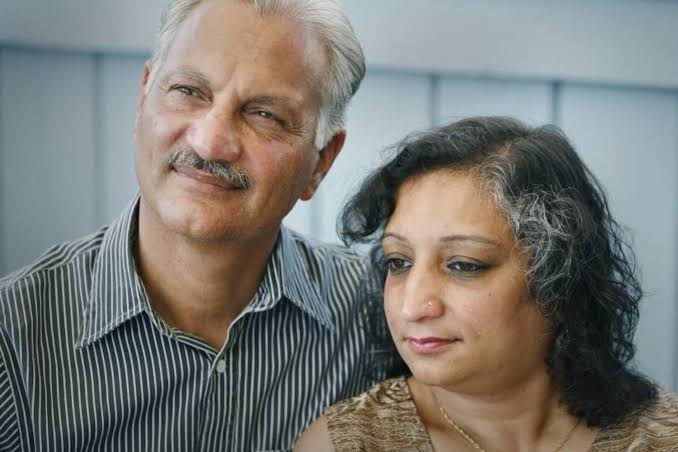
Perhaps the most remarkable part of Warren Glowatski’s story is his eventual contact with Reena Virk’s parents, Suman and Manjit Virk. Through a restorative justice process, Glowatski was able to meet and speak with the people who had lost their daughter because of his actions. This was not an ordinary meeting, and the emotional significance of the encounter was enormous.
For Reena’s parents, the process gave them an opportunity to ask questions and express feelings that had remained with them for years. For Glowatski, it created an opportunity to face the people most directly affected by his actions. Restorative justice does not remove a criminal conviction, nor does it undo a death. Instead, it attempts to create a space where responsibility, truth, and human consequences can be confronted directly.
The Virk family’s decision to forgive Glowatski has often been described as an extraordinary act. Forgiveness in this context should not be confused with forgetting. Reena’s parents did not get their daughter back, and their pain could not simply disappear. Their willingness to support Glowatski’s rehabilitation reflected their own decision about how they wanted to move forward with their lives. Their story became one of the most emotionally complex aspects of the entire case.
Warren Glowatski’s Parole and Release
Glowatski was granted day parole in 2007 after serving years in prison, and he was eventually granted full parole in 2010. His release followed a lengthy rehabilitation process and was supported by Reena’s parents, who had participated in restorative justice with him.
The decision attracted attention because parole in a high-profile murder case can generate strong public reactions. Some people believe that a person convicted of murder should remain imprisoned for life, while others believe that individuals who committed crimes as teenagers should have the possibility of rehabilitation if they demonstrate meaningful change. Glowatski’s case sits directly in the middle of that debate.
His parole was not presented as a declaration that the past no longer mattered. Instead, it reflected the parole system’s assessment that he could return to the community under conditions designed to reduce risk. Reports at the time described conditions that included restrictions on substance use and associations with known criminals, along with supervision requirements.
Where Is Warren Glowatski Now?
Interest in where Warren Glowatski is today increased significantly after Under the Bridge introduced the case to a new generation of viewers. The 2024 Hulu miniseries, based on Rebecca Godfrey’s book, dramatized the events surrounding Reena Virk’s murder and included Glowatski as one of the central figures in the story. Actor Javon Walton portrayed him in the series.
Publicly available information about Glowatski’s life after parole is limited. That is important because many websites publish unsupported claims about the current jobs, relationships, income, or personal activities of people connected to true-crime cases. Such claims should be treated carefully unless they come from reliable sources. The strongest documented information concerns his parole, rehabilitation efforts, and involvement in restorative justice.
What is clear from reliable reporting is that Glowatski’s life after prison has been connected to the broader question of rehabilitation. His case is frequently discussed not because he became a celebrity but because his path raises difficult questions about whether someone responsible for a terrible crime can change over time and what society should do when that change appears genuine.
Warren Glowatski and Under the Bridge
The release of Under the Bridge brought the Reena Virk case back into the public conversation. The series was inspired by Rebecca Godfrey’s book and explored the people and circumstances surrounding the murder. It also examined the social environment in which the teenagers lived and the consequences that followed the crime.
Javon Walton’s portrayal of Glowatski gave viewers a dramatized interpretation of a teenager whose actions had devastating consequences. As with any television adaptation of a real case, viewers should remember that a scripted series is not the same as a court transcript or documentary record. Certain scenes and character interactions may be condensed, rearranged, or dramatized for storytelling purposes.
Still, the renewed interest in the case has encouraged many people to learn more about Reena Virk herself. That is perhaps the most important reason to approach the story responsibly. Reena was more than the victim in a famous crime. She was a teenager with a family, friendships, dreams, and a future that was taken away from her.
The Larger Lessons From His Story
The story of Warren Glowatski is ultimately about much more than one criminal conviction. It raises questions about the behavior of teenagers, the influence of peer groups, bullying, and the ways violence can escalate when young people make destructive choices. It also shows why early intervention and support for vulnerable teenagers can be so important.
At the same time, the case demonstrates that rehabilitation is complicated. A person who commits a serious crime may later change, but that change cannot restore the life that was lost. Society therefore has to balance two realities: victims and their families deserve justice and recognition of their suffering, while criminal justice systems also have to consider whether offenders can genuinely rehabilitate and safely return to society.
Warren Glowatski’s story is also a reminder of the power and complexity of forgiveness. Reena Virk’s parents chose a path that allowed them to confront the person responsible for their daughter’s death and eventually support his rehabilitation. Their decision was deeply personal, and it should not be interpreted as diminishing the seriousness of the crime.
Final Thoughts on Warren Glowatski
Warren Glowatski remains a controversial and deeply complicated figure because his life is permanently connected to the death of Reena Virk. As a teenager, he participated in a crime that ended the life of a 14-year-old girl. He was convicted of second-degree murder, sentenced to life imprisonment, and spent years behind bars before eventually receiving parole.
His later involvement in rehabilitation and restorative justice adds another layer to an already difficult story. The fact that Reena’s parents eventually forgave him is particularly powerful, but it does not erase the tragedy or change the permanent consequences of what happened. Instead, it shows how different people can respond to unimaginable loss in different ways.
Today, the name Warren Glowatski continues to appear in discussions about the Reena Virk case, especially following the popularity of Under the Bridge. But the most meaningful way to understand the story is to keep the focus on the full picture: the life of Reena Virk, the devastating consequences of teenage violence, the legal process, and the difficult questions surrounding accountability and redemption. His story may be about rehabilitation, but at its heart, it is also a reminder of how one night of violence can permanently change countless lives.