
HVAC Repair: What’s at Stake When You Wait Too Long
There’s a particular kind of discomfort that sneaks up on you. The house feels a little warmer than usual. The air seems stale. You adjust the thermostat, wait a few minutes, and nothing changes. Sound familiar? That’s your HVAC system asking for attention—and the longer that request goes unanswered, the more expensive the conversation gets.
HVAC repair isn’t just a maintenance checkbox. It’s one of the most consequential decisions a homeowner makes, and the timing of that decision matters more than most people realize.
What Happens Inside an HVAC System That’s Struggling
Your HVAC system is constantly working—heating in winter, cooling in summer, circulating air year-round. That kind of continuous operation puts stress on components that were designed to last, but not forever.
When something starts to fail, the system doesn’t stop working immediately. It compensates. A clogged filter forces the blower motor to work harder. A refrigerant leak makes the compressor run longer cycles. A worn capacitor causes the unit to struggle at startup. These aren’t dramatic failures—they’re slow, quiet strains that build up over time.
The problem with this gradual decline is that it’s easy to miss. Energy bills creep up. Rooms take a little longer to reach the right temperature. You chalk it up to the weather or a drafty window, and life moves on. Meanwhile, the underlying issue compounds.
That’s why catching problems early—before one failed part triggers another—makes such a significant difference in both cost and comfort.
The Most Common HVAC Repair Issues Homeowners Face
Understanding what typically goes wrong helps you recognize the warning signs before they escalate.
Refrigerant Leaks
Low refrigerant is one of the leading causes of poor cooling performance. It’s not a fluid that gets consumed—it circulates in a closed loop. If levels drop, there’s a leak somewhere in the system. Refrigerant leaks affect efficiency, strain the compressor, and can cause ice buildup on the coils.
Capacitor and Contactor Failures
Capacitors help the motors in your HVAC system start and run. When they weaken, you may hear clicking or humming from the unit, or notice that it takes a few attempts to kick on. Contactors—which control the electrical flow to the compressor and fan motors—are another common wear point, especially in older systems.
Dirty or Blocked Coils
Both the evaporator coil (inside) and condenser coil (outside) play a critical role in heat transfer. Dirt, debris, and algae buildup reduce their efficiency significantly. A unit with coated coils has to work much harder to achieve the same result, shortening its lifespan in the process.
Thermostat and Sensor Issues
Sometimes the HVAC unit itself is fine, but the thermostat is giving it bad instructions. A miscalibrated or failing thermostat can cause the system to short cycle, overheat, or run continuously—all of which wear out components faster than normal operation would.
Drainage Problems
Air conditioning systems remove humidity from the air, and that moisture has to go somewhere. Clogged condensate drain lines can cause water to back up into the unit, leading to water damage, mold growth, and system shutdowns triggered by float switches.
Why DIY Has Its Limits With HVAC Systems
There’s a certain satisfaction in fixing things yourself. Replacing an air filter? Absolutely. Clearing debris from around the outdoor unit? Go for it. But beyond the basics, HVAC systems involve electrical components, refrigerant handling, and calibrated pressure systems that require specialized tools and training.
Attempting to repair a refrigerant leak or replace a compressor without the right equipment doesn’t just risk damaging the system—it can also create safety hazards. Refrigerant handling, for example, is federally regulated and requires EPA certification. Electrical faults in HVAC systems can cause fires or injury when handled incorrectly.
The smart approach is knowing where the line is. Routine upkeep is a homeowner’s responsibility. Anything beyond that is a job for a licensed technician who can diagnose the root cause, not just the symptom.
What Professional HVAC Repair Actually Looks Like
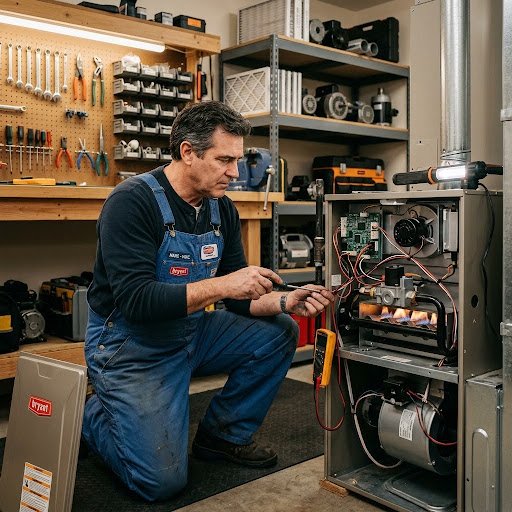
When a trained technician visits your home, the process is more involved than simply replacing whatever broke. A thorough repair visit includes:
- System diagnostics: Checking refrigerant pressure, electrical connections, airflow rates, and component performance
- Root cause identification: Finding out why the part failed, not just which part failed
- Efficiency assessment: Identifying other components that are wearing and may cause issues soon
- Post-repair testing: Verifying the system runs correctly through a full cycle before the job is closed
This kind of comprehensive approach is what separates a quality repair from a short-term fix that leaves you calling again in three months.
When Repair Makes More Sense Than Replacement
A common question homeowners ask is whether to repair or replace an aging system. There’s no universal answer, but a few factors tip the scale one way or the other.
Repair typically makes sense when the system is less than 10 years old, the repair cost is less than half the price of a replacement, and the system has been reasonably well-maintained. Replacement becomes more attractive when the unit is approaching or past its expected lifespan (typically 15–20 years for a well-maintained system), when energy bills have climbed significantly, or when the same components keep failing.
A trustworthy HVAC technician will walk you through both options honestly—including long-term cost projections—so you can make the decision that fits your home and your budget.
Keep Your Home Comfortable Year-Round
HVAC repair performed by skilled technicians gives your home’s heating and cooling system the professional attention it needs to run efficiently, extend its lifespan, and keep your indoor comfort from becoming an afterthought—especially during the seasons when you need it most.
NexAir Home Services brings that level of professional care directly to homeowners who want more than a quick patch job. Every repair is handled by licensed technicians who treat your system—and your home—with the precision it deserves.
Don’t wait for a complete breakdown to take action. If your system has been showing any of the warning signs covered in this post, now is the right time to get it looked at. Reach out to NexAir Home Services today and get your HVAC system back to performing at its best.