
Unlock AI Agents That Work Like an Entire Team with Intelligent Collaboration
AI has come a long way from answering individual queries with chatbots. Nowadays, AI is capable of handling entire workflows with dedicated agents responsible for various tasks. Businesses are increasingly moving away from the use of separate tools and towards connected intelligence that distributes knowledge throughout the project. This transition enables businesses to streamline manual tasks, boost teamwork, and finish complicated procedures more quickly and effectively.
The Evolution from Individual AI Tools to Intelligent Agent Teams
The initial applications of AI were centered on specific functions, such as content creation, coding assistance, or image generation. Those tools didn’t always know about an overall organizational goal or the history of a project. This changed when specialized AI agents prioritized specific areas of business activity while still understanding the context. Connected intelligence enables several agents to share relevant data, rather than working in isolation. This is a coordinated model that enables AI-native business operations, in which development, marketing, design and communication are aligned. Additionally, shared organizational knowledge means that no work is repeated, as all agents have access to the same information during the course of projects and operational processes.
Understanding the Intelligence Ecosystem Inside Converge AI
Business automation is based on a combination of individual and institutional intelligence in shared environments. Individual intelligence deals with accomplishing individual tasks effectively, and institutional intelligence helps retain knowledge, reusable assets and project context within the organization. In Converge AI, collaborative AI architecture enables intelligent agents to share information rather than having individual conversations. Business-oriented automation is more reliable, as all actors involved in the automation process know about common goals, project status and shared workflows. This integrated system enhances decision-making and helps to promote consistency across departments and long-term initiatives, without the need to instruct repeatedly.

Why an Integrated AI Agent Ecosystem Delivers Better Business Outcomes
An integrated ecosystem can drive better business performance, as connected intelligence enables coordinated decision-making across business functions. Unified workflows reduce the need for jumping between disconnected applications and maintain the important context of the project. As the execution is consistent, the quality is improved by the fact that agents participating in the execution share common knowledge of the organization that helps them reach common goals. Quick turnaround is possible when development, marketing, design, creative production and collaboration are done in parallel rather than in isolation. Reusable knowledge, standardized workflows, and scalable business growth with connected automation also help to increase long-term operational efficiency. The principal benefits to a business are:
- Interconnected decision-making between departments.
- Shared workflows and context of organizations.
- Stability during project lifecycles.
- Quick delivery throughout development and creative processes.
- Less repetition of administrative coordination.
- Improved use of the resources within the organization.
- Better technical and creative team collaboration.
- Improved long-term operational scalability.
AI Agents Supporting Every Business Function
Specialized agents are becoming more common, supporting not just specific activities, but all of them. Enter Pro, an intelligence that helps you plan, code, deploy and leverage development knowledge as you turn application ideas into production-ready software. Marketing agents produce assets for campaigns and keep messaging consistent throughout channels. Professional visuals are designed by design agents that maintain existing brand standards. Video production agents help with the script, storyboard, voiceovers, editing and the creation of publish-ready material. Collaboration agents organize shared information, minimizing information gaps among departments. Workflow automation agents are the links that bind together repetitive business processes, enabling processes to run smoothly and without unnecessary manual hand-offs and administration.
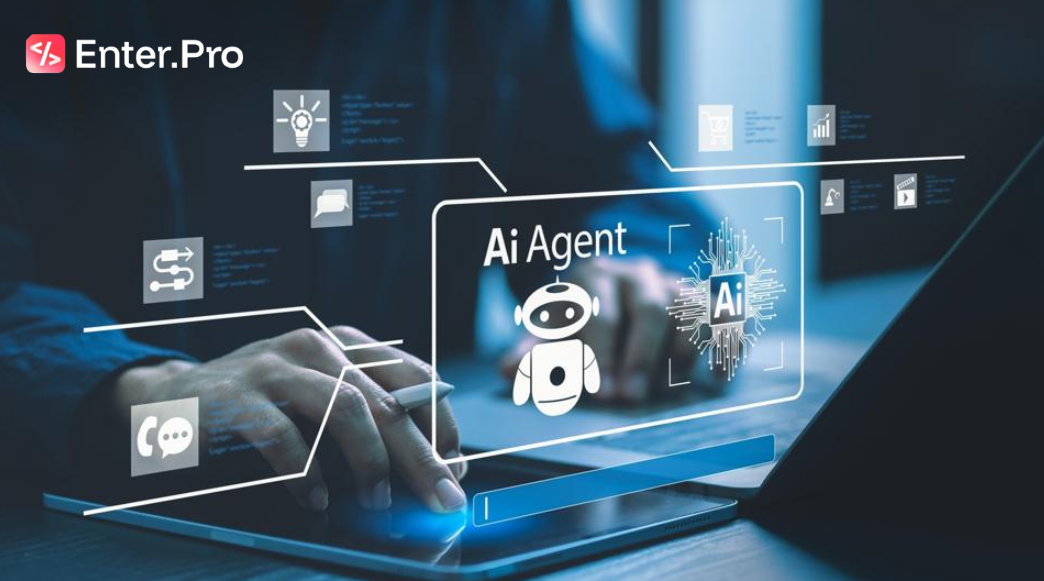
Enter Pro Empowers Development Teams Through AI
Today’s software development demands meticulous planning, efficient coding, quick testing, and reliable deployment in interdependent environments. AI development agents also ease the planning process by breaking down project needs and creating structured application foundations. Production-ready code is organized in its development process and is also more easily reviewed and maintained. Live visual editing enables immediate interface tweaks without interrupting any development tasks. Integrated deployment capabilities facilitate application delivery by integrating infrastructure, analytics, payment support, internationalization and deployment workflows in connected processes. Knowledge that can be reused improves the chances of successful future projects, as components, templates, workflows and technical assets that have proven successful on similar business applications are available for reuse.
Framia Pro Enables Creative Teams with Specialized AI
More and more specialized AI systems are used for creative productions to coordinate multiple production processes in a single production environment. AI director agents enable connected workflows to create scripts, storyboards, scenes, voiceovers, music, and publish-ready videos. Visual identity is consistent across promotional materials, advertising graphics, product photography and marketing assets through brand-consistent design intelligence. Smart editing canvases make revisions easy with coordinated editing of images, video footage, music, captions and layered creative elements. There is less complexity when you use prompt-free production, as natural language is an effective way to express creative objectives. Reusable assets and Combos integration for extended digital production workflows that enable interactive experiences as well as visual content are also important features for creative teams.
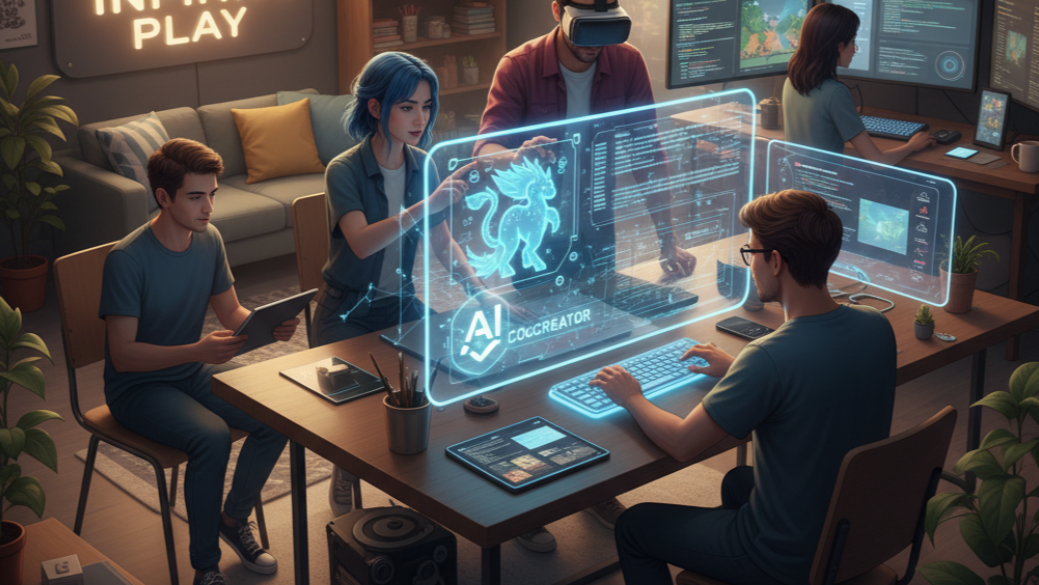
Shared Context Creates Smarter Team Collaboration
By providing project knowledge to all intelligent systems, shared organizational context turns stand-alone automation into synchronized teamwork. A centralized organizational info boosts collaboration, as each department is aware of the priorities, milestones and business goals. Having the same understanding of the project helps to limit the misunderstandings that often occur when different tools produce different results. With improved cross-functional communication, development, marketing, creative production and operations are able to work naturally around the same information. Previous conversations, approved assets, workflows, and decisions are retained, eliminating repetitive instructions. Little by little, continuous learning throughout workflows optimizes the organization’s efficiency, while also retaining key institutional knowledge for future projects.
Scaling Business Operations with AI Instead of Additional Headcount
As your organization grows, your workloads tend to grow, too—especially if you don’t hire more people. Connected AI operations are able to boost operational capacity by performing repetitive tasks across different departments at the same time. A number of concurrent initiatives can be handled because specialized agents do complementary functions without unnecessary bottlenecks. The faster execution ensures better project delivery since planning, content creation, coding, creative work and workflow coordination take place in connected environments. By streamlining resource use, current workers can focus on strategic tasks that demand human judgment rather than repetitive tasks. This operational model enables the sustainable growth of the business, quality, consistency and quicker response from the organization to increase in business demands.
Conclusion
AI has progressed from individual tasks to become integrated systems, aiding in entire organizational processes. Shared knowledge across all business functions enables specialized development, creative, collaboration and automation capabilities. Organizations can efficiently build applications, create creative content, enhance communication and manage operations with institutional intelligence, reusable assets, coordinated workflows and unified project understanding. This integrated strategy fosters sustainable expansion, swift project delivery, enhanced cooperation and tangible business results, without relying entirely on the size of the teams.