Packing Tips That Make Relocating Easier
Moving house has a habit of starting with optimism and ending with a roll of tape stuck to your elbow. One minute you are neatly stacking plates, the next you are wondering why you own seventeen chargers and three half-used candles. It happens to nearly everyone. The trick is not to pack harder, but to pack smarter.
For plenty of Australians, relocating comes with a mixed bag of headaches. A Sydney terrace with narrow stairs, a Brisbane townhouse with summer heat that sticks to everything, or a Melbourne apartment where the lift seems to be taking a tea break just when the couch needs to move. Good packing can save hours, a fair bit of stress, and a few choice words muttered under the breath.
Start Earlier Than Feels Necessary
Packing always feels like a job for “tomorrow”, which is usually how people end up with kitchenware in laundry baskets at midnight. The better approach is to start well before moving day, even if it is just one drawer at a time. That slow and steady pace makes the whole process feel less like a disaster and more like a tidy project.
Begin with items you rarely use. Seasonal clothes, old books, spare linen, decorations, the fancy serving platter you bring out twice a year, all of that can go early. Keeping daily essentials unpacked for longer means less rummaging around when you still need to make breakfast and survive the week.
Work Room by Room
Trying to pack the whole place at once is a fast way to lose momentum. Room by room feels much calmer. It also helps prevent that odd moment when kitchen utensils end up in the same box as bathroom supplies, which is a weird little gamble nobody needs.
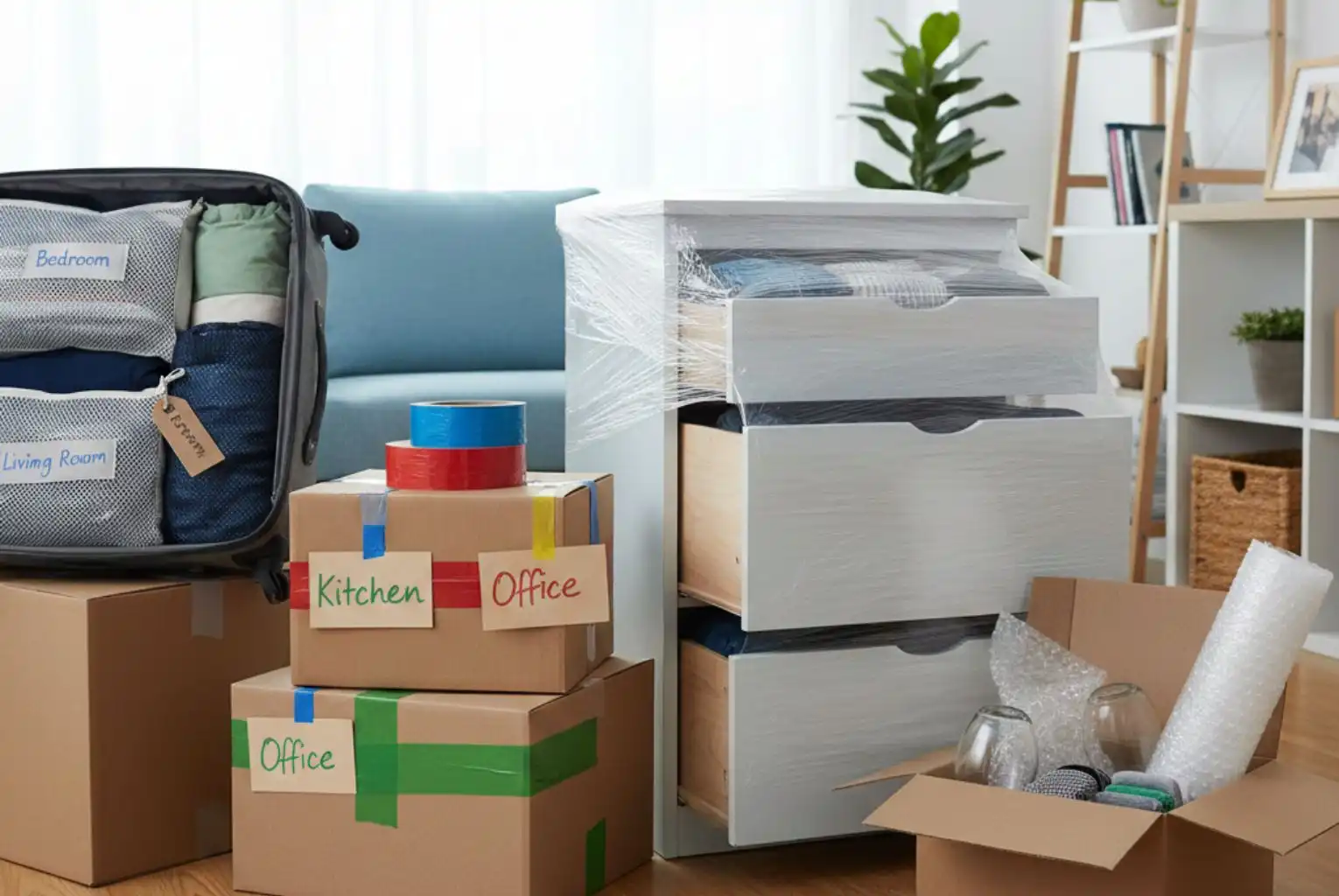
Finish one space before moving to the next. Label each box with the room name and a short list of what is inside. A label like “main bedroom, winter jumpers, socks, bedside lamp” saves you from opening six boxes later just to find a charger. Tiny effort now, far less swearing later.
Use the Right Boxes and Materials
Not all boxes are equal. Supermarket leftovers are handy in a pinch, but flimsy boxes tend to collapse when you least want them to. Strong moving boxes, packing tape, paper, bubble wrap, and marker pens are worth spending a bit of money on. They are the difference between a tidy move and a cardboard crime scene.
Wrap fragile items properly. Plates go upright rather than stacked flat, glasses need cushioning, and picture frames should be covered so they do not scratch each other. Towels and tea towels can double as padding, which is practical and a bit smug in a good way.
Pack a Essentials Box for the First Night
This is the box that saves your sanity. Keep it separate and label it clearly. It should hold the basics for the first twenty-four hours, maybe a bit longer if the unpacking drags on.
Think kettle, mugs, phone chargers, toilet paper, soap, a change of clothes, basic toiletries, snacks, and any medication. If there are children or pets in the mix, add their essentials too. Nobody wants to be hunting for a toothbrush at 10 p.m. after a long haul across town.
Be Ruthless With the Declutter
There is no point packing things you never use. Old shirts that have not seen daylight since the last federal election, chipped mugs, cords with no known device, and kitchen bits that seemed useful once can all go. This is the bit where moving starts to feel strangely freeing.
A simple rule helps. If an item is broken, unused, or only kept out of guilt, it probably does not deserve a place in the next house. Selling, donating, or recycling these items means fewer boxes, less lifting, and a cleaner start on the other side.
Label Boxes Clearly, Not Poetically
It is tempting to write clever notes on boxes. “Winter relics”, “fragile treasures”, or “miscellaneous life stuff” sounds charming until you need the saucepan and no one knows where it went. Plain, clear labels work best.
Use the room name, a quick contents note, and a number if you like tracking things closely. Some people mark boxes with coloured stickers for each room, which makes unpacking much smoother. If you are using a moving company Sydney families often rely on, these labels help the process run far more neatly too.
Pack Heavier Items Small and Light Items Big
It sounds obvious once someone says it out loud, yet plenty of people still pack books into giant boxes and then act surprised when they cannot lift them. Smaller boxes are better for heavy items like books, canned food, and tools. Larger boxes suit lighter things such as bedding, cushions, and clothes.
This keeps boxes manageable and far safer for everyone carrying them. It also makes loading the truck less awkward. One overly heavy box can be a nuisance for everyone around it, including the poor soul trying to angle it through a doorway that suddenly feels too narrow.
Keep Things Clean and Protected
Dust, leaks, and crumbs have an annoying talent for showing up in boxes if you leave items loose. Clean everything before packing. Wipe down kitchenware, empty bins, and dry anything that could trap moisture. A small bit of care now prevents unpleasant surprises later.
For clothes, vacuum bags can help with bulky winter items. For shoes, stuffing them with paper keeps their shape. Electronics should stay in their original packaging if possible, though a well-padded box will do the job if the original has long since vanished into the garage abyss.
Take Photos of Cable Set-Ups
Anyone who has spent half an afternoon staring at a tangle of wires knows the value of a quick photo. Before unplugging the television, computer, or home entertainment set-up, snap a picture. It makes reconnection much easier when you are tired and the instructions may as well be written in code.
Bag small accessories together, tape the bag to the relevant device, and label it clearly. Remote controls, adapters, charging cords, and screws have a strange talent for disappearing when packed separately. Keeping them together saves needless searching.
Give Special Care to Delicate or Oddly Shaped Items
Some things just refuse to pack neatly. Lamps, artwork, mirrors, sporting equipment, and awkward kitchen gadgets all deserve extra attention. Wrap them properly and choose boxes that suit their shape. If an item feels impossible, it might need a custom setup with padding and sturdy support.
Artwork and mirrors are especially vulnerable. Use corner protectors, thick wrapping, and upright positioning where possible. A little extra fuss here is worth it. No one wants to arrive at the new place and discover a favourite frame has cracked in the back of the truck.
Keep a Moving Day Kit Handy
This is slightly different from the essentials box, though it can overlap. A moving day kit is the grab-and-go bag you keep with you during the move. It should include your keys, wallet, water, snacks, important paperwork, medication, and any must-have phone chargers.
A notebook and pen can help too. It is surprisingly easy to forget which box contains the good coffee when you have been running on adrenaline and takeaway toast. Having a few basics close by makes the day feel more under control.
A Little Planning Goes a Long Way
Packing for a move is rarely glamorous, but it does not need to be painful. Small, sensible habits make a huge difference. Start early, label clearly, protect fragile items, and keep the essentials close. That is the sort of practical routine that turns a messy move into something far more manageable.
Across Australia, from tight city apartments to family homes with garages full of mystery items, the same rule keeps showing up. The better the packing, the easier the settling-in. And after all the lifting, tape, and box juggling, a smooth unpacking feels like a proper win.